Proxy Servers: What Are They, How They Work & Different Types of It
Proxy Servers: What Are They, How They Work & Different Types of It


11 Minutes
Proxy server is a middlemen between you and the internet, as they hide your IP from the internet. Depending on their type, they can help you with several things.
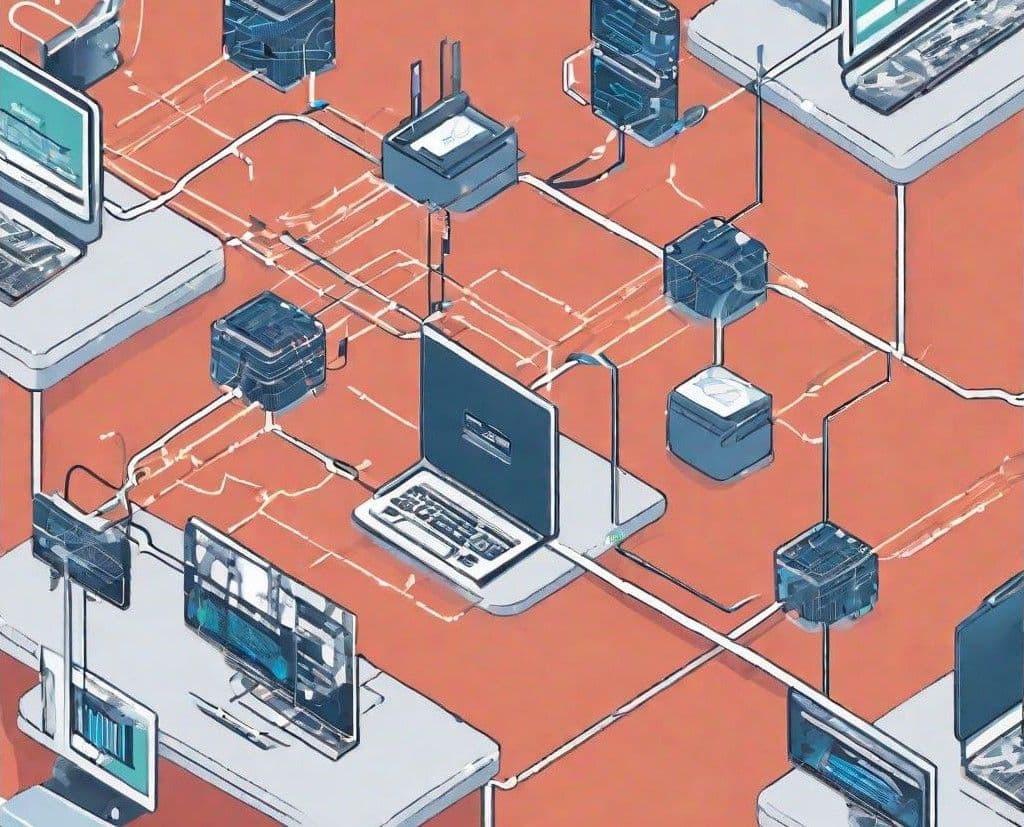
If you have heard about proxies and you are curious about them don’t miss this article. We’re going to explain about proxies and how they can improve our experience of using the internet. Later we introduce some different type of proxy and the function. Proxy is a middlemen or mediator between you as a user and internet. In fact, you’re sending the request to proxy and it will send them to the server you’re trying to reach, on behalf of you and then it collects the data and send them to you. Proxies can help you with several things depends on their type, they improve security, privacy, and performance in the process. So, you should select the right type of proxy based on your purpose. Here is some explanation about different proxy servers to help you choose wisely but before we go any further it seems necessary to know the differences between VPNs and Proxies.
VPN vs. Proxy
Good news for gamers and streamers is that you can use both Proxy and VPN for streaming and gaming. Both VPN and Proxy encrypts IP address so it means it is not your actual IP address which is sending the request to the web server, and they will make it hard for the advertisers to have user behavior studies over you or the websites to track you. but the web activity will be encrypted when your using VPN and when your using Proxy the web data won’t be encrypted and the data that you receive is decrypted. VPNs and Proxies can be used to bypass geo-restrictions by connecting to another server in a completely different location. They both can help you as a user to have an extra layer of security and privacy over internet, but we can say that the privacy and security Proxy provides you is limited due not to encrypting the website data and not to concealing the user’s location and identity as the level as VPN. they both slows down browsing speed a bit but when you’re using VPN you get stable connection that you won’t experience the same using proxies and you should expect traffic logging.
VPN covers all websites and apps and they usually give users options over which apps are included to operate through them. VPN creates tunnel between end users which is something we should not expect using proxies. And as you know VPN stands for Virtual Private Network which means that they do simulate a private network over public one unlike Proxies that do not so. Last but not least Proxies are cheaper than VPNs and easier to provide especially when you need them only once. Now if you’re still reading, you’ve probably learned enough about proxies, and you want to know about the features of each type of proxy.
Residential Proxy
This proxy is used when users are concerned about their privacy and online identity. It helps you hide your real location and makes it difficult to track your online activities. Residential proxies use an IP address that is connected to an Internet Service Provider. The fact that each residential proxy address has a real location and will not be recognized as a data center by the web servers decreases the possibility of getting blocked. Compared to datacenter proxies, residential proxies are more reliable. Residential proxies use an intermediary server to route your internet traffic and change your IP sending a request to the internet. Your real IP will be hidden and the one that you’re using is completely normal because it assigned to a real residential device connected to a local network.
If you are looking for cheap & reliable residential proxies, Resi.gg provides you with best residential proxy.
There are several reasons you should want to use residential proxies such as getting access to geo-locked content or maintaining your privacy. Some users use this type of proxy to bypass internet restrictions and see censored content. You can use residential proxies to manage several social media, collect region-based data, and localize ads. Overall residential proxies are used to: • increase security as it adds a security layer while you’re browsing the web. • Being anonymous because they change your IP address and it’s hard to track your real IP and identity. • Decreasing the risk of getting blocked as the IP address that residential proxy provides you is not identified as a datacenter and you’re a normal user of the web server. • Getting access to the content that is available only in a specific location.
Some activities that you can do much more easily using residential proxies are: collecting market intelligence data such as pricing information, customer behavior, and product trends/Reselling/ Managing multiple social media accounts/ comparing prices from different regions or countries/ getting access to wider entertainment such as streaming services, TV channels, or gaming platforms.
Overall, residential proxies are an essential tool for businesses that need to access websites and services anonymously and reliably. They provide a high level of anonymity and reliability, making them ideal for web scraping, data mining, social media management, online advertising, and e-commerce.
Residential proxies provide a higher level of anonymity and security as they use real IP addresses from internet service providers. They allow users to access geo-restricted content by providing an IP address from a specific location. Residential proxies are less likely to be detected and blocked by websites as they appear to be legitimate users. Residential proxies are commonly used for web scraping, data mining, and market research. They can also be used for online advertising and social media management to access different locations and avoid being flagged as a spammer.
Static Residential Proxy
A static residential proxy is a type of proxy server that uses an IP address assigned to a residential internet service provider rather than a data center. In other words, it is a proxy server that uses an IP address assigned to a real home or business, making it more difficult for websites to detect that the connection is coming from a proxy server.
Static residential proxies are typically used for web scraping, data mining, and other automated processes that require a high level of anonymity and reliability. They are also commonly used for social media management, online advertising, and e-commerce. Static residential proxies are also useful for web scraping and data mining because they allow users to access large amounts of data without being detected or blocked by websites. This is particularly useful for businesses that need to gather data on competitors, market trends, and customer behavior.
• They provide a higher level of reliability as the IP address remains the same over time. • Static residential proxies are less likely to be detected and blocked by websites as they appear to be legitimate users with a consistent IP address. • They offer a higher level of anonymity and security as they use real IP addresses from internet service providers. • They are commonly used for web scraping, data mining, and market research. They are also used for online advertising and social media management to access different locations and avoid being flagged as a spammer.
Static Residential Proxy vs. Residential Proxy
They both use the IP address assigned to a real home or business. Static Residential proxy’s IP address remains the same for an extended period whereas residential proxy IP address changes periodically. Both proxies provide you a high level of reliability and anonymity and you can use them to manage social media accounts, scraping, data mining, and online advertising.
Static Datacenter Proxy
This type of proxy is not associated with a residential location or an internet service provider, instead, it uses an IP address assigned to a datacenter. When a user connects to the internet using a datacenter proxy, their internet traffic is routed through the proxy server. The proxy server then sends the user's request to the target website or server and returns the response to the user.
As static datacenter proxies are not associated with any residential location, they can provide fast and reliable connections, and that makes them a perfect choice for tasks containing a large amount of data such as web scraping, data mining, and online advertising. Due to not being assigned to a physical location, they’re often easier for websites to detect and block and they do not provide a high level of anonymity and privacy for the user. Overall, static data center proxies can be a useful tool for users who need fast and affordable proxy services. But be cautious using them on websites that are known to block datacenter proxies or activities it’s important to be unknown and require a high level of anonymity and privacy.
• They offer faster speeds and lower latency as they are not tied to a physical location. • Datacenter proxies are generally more affordable than residential proxies. • They can be easily scaled up or down depending on the user's needs. • They are commonly used for web scraping, data mining, and market research and also, they are used for online advertising and social media management to access different locations and avoid being flagged as a spammer. • Datacenter proxies are also used for gaming and streaming to access content that may be restricted in certain regions.
Static Datacenter Proxy vs. Static Residential Proxy
Static Residential Proxy provides a higher level of anonymity compared to Static Datacenter Proxy which makes it ideal for tasks that require high levels of anonymity, such as web scraping, data mining, and online advertising. Compared to datacenter proxies, residential proxies are typically much more expensive, making them less accessible for users on a budget. the choice between a static datacenter proxy and a static residential proxy depends on the user's specific needs. Users who require high levels of anonymity may prefer a static residential proxy, while users who need fast and affordable proxy services may prefer a static datacenter proxy.
Mobile/LTE Proxy
Mobile/LTE is a type of proxy that uses a mobile network connection, such as 4G LTE, to route internet traffic through a mobile device or SIM card. Then it masks the real IP address of the user to bypass certain restrictions or blocks and have greater anonymity and privacy. It is called a mobile proxy because it uses the IP address of a mobile network. They should not necessarily run on mobile phones. The function is similar to residential proxies as they use a gateway on the user’s device to assign a specific type of IP that belongs to a mobile data network in this proxy. The proxy server then routes the user's internet traffic through the mobile network, allowing them to access websites and online services as if they were using a mobile device. Some common use cases include web scraping, data mining, and social media automation. Mobile/LTE proxies can also be used to access geo-restricted content or bypass IP-based restrictions on certain websites or services. They have a high level of anonymity and it’s hard for website servers to track and block them. Plus, they’re fast and reliable which makes them perfect for several tasks. The only thing about mobile proxies that can be a problem is the price which can be a bit higher than other proxies.
• They offer a high level of anonymity as they are tied to mobile devices that constantly change IP addresses. • Mobile proxies are less likely to be detected and blocked by websites and online services. • They provide access to geographically restricted content and services. • Mobile proxies are commonly used for social media management, online advertising, and market research. They can be used for web scraping and data mining to avoid detection and bypass anti-scraping measures. • Mobile proxies are also used for gaming and streaming to access content that may be restricted in certain regions. • Mobile proxy providers must ensure that their service is reliable and provides high-quality IP addresses that are not associated with any malicious activity.
Mobile proxy vs. residential proxy
Mobile proxy uses a mobile network routing the internet through a mobile device or SIM card while residential proxy uses an IP address associated with an Internet service provider through a physical residential address. The main difference between these two proxies is the type of IP address they’re using. Mobile proxies can be more expensive due to the cost of mobile data plans but they’re faster and more reliable. In terms of usage, mobile/LTE proxies are typically used for web scraping, data mining, and social media automation, while residential proxies are often used for tasks such as ad verification, market research, and online security.
Mobile proxy vs. Datacenter proxy
Mobile proxy uses a mobile network connection to route the internet through a mobile device or SIM card while datacenter proxy routes the internet using an IP address provided by a datacenter. The IP address that the mobile proxy uses is a dynamic one that frequently changes but datacenter proxy uses a static IP address that is associated with a specific location. In terms of usage, mobile proxies are typically used for web scraping, data mining, and social media automation, while datacenter proxies are often used for tasks such as website testing, SEO, monitoring, and online security.
Sneaker Proxy
This type of proxy server is specifically designed for buying limited-edition sneakers online. It allows users to bypass restrictions and purchase sneakers from multiple websites without being detected by the website's security systems. Limited edition sneakers tend to sell out extremely quickly, and usually, only one pair can be purchased per account. One way to increase the chance of getting one or even many pairs is to open multiple accounts. The problem is that sneaker sites identify several accounts belonging to the same person by tracking IP addresses and having them blocked. Using sneaker proxies, the real IP address of the user will be counseled and it’ll lower the risk of getting blocked. They can also be used for other types of online purchases where there are restrictions or high demand for a particular product. Sneaker proxies should be fast due to their usage. They work as same as high anonymous proxies such as residential proxies and their main goal is to hide the user’s IP address from the website server.
• They provide a higher level of anonymity and security for sneaker botting activities. • Sneaker proxies allow users to bypass website restrictions and purchase limits. • They offer faster connection speeds and lower latency for faster checkout times. • Sneaker proxies are used for purchasing limited edition sneakers and other high-demand products. • They can be used for multiple account management and mass purchasing. Sneaker proxies are also used for reselling and arbitrage in the sneaker market.
Sneaker proxy vs. Residential proxy
Residential proxies are typically more expensive than Sneaker Proxies, but they offer a higher level of anonymity and are less likely to be detected by websites' security systems. This is because residential IP addresses are associated with real homes and internet users, making them more difficult to identify and track.
In terms of usage, you can use residential proxies for several tasks such as web scraping, social media management, and online advertising. They can even be used for buying limited edition sneakers but they are not specifically designed for this purpose.
Overall, while both Sneaker Proxies and residential proxies provide anonymity and bypass restrictions, they have different pricing structures and are designed for different use cases.
Sneaker proxy vs. Datacenter proxy
Datacenter proxies are typically cheaper than both Sneaker Proxies and residential proxies, but they are also less reliable and more likely to be detected by websites' security systems. We usually use datacenter proxies for tasks that require speed or a high volume of requests such as web scraping or SEO monitoring. They can be detected by web servers as a proxy and get blocked while sneaker proxies’ IP addresses are hard to track and get blocked due to the purpose that are designed for.
Sneaker proxy vs. Mobile proxy
Both proxies are similar in that they use IP addresses that are difficult to detect and track and they have a high-level anonymity. However, Sneaker Proxies are typically more expensive than mobile proxies due to their specialized use case.
Conclusion
At the end we have some summarized information gathered for you so it can help you choose better and remember details about each type of proxy here we explained about and the usage of them.
Residential Proxy
• Anonymity • Security • Real IP addresses from internet service providers • Allow access geo-restricted content • Less likely to detected or blocked by websites
Static Residential Proxies:
• Higher level of reliability as the IP address remains the same over time • Less likely to be detected and blocked by websites • Higher level of anonymity and security
Datacenter Proxies:
• Faster speed • Lower latency • More affordable • Easily scaled up or down
Mobile Proxies:
• High level of anonymity • Less likely to be detected and blocked • Provide access to geographically restricted content
Sneaker Proxies:
• Anonymity • Security • Allow users to bypass website restrictions • Faster connection • Lower latency
Tags:


Popular Articles
Unleash Online Freedom with Us
Discover our premium proxy plans that will revolutionize your web experience. With cutting-edge technology, unbeatable reliability, and limitless possibilities, our proxies are your gateway to unrestricted access, enhanced security, and lightning-fast browsing. Join our satisfied community and subscribe today to unlock the true power of proxy services.